
Why Galleries and Art Dealers Should Prioritize Provenance From the First Sale
The global art market is becoming increasingly focused on provenance, transparency, and long-term documentation. As collectors become more selective and research-driven, the importance of provenance discussion and continuity should no longer be limited to secondary market transactions or institutional collections.
It should begin at the very first sale.
For galleries and art dealers, this represents a major shift in responsibility and opportunity. The initial point of sale in the primary market is where provenance starts, making galleries and dealers critical participants in preserving the long-term cultural
and financial value of artworks.
Collectors who prioritize provenance and documentation today will be better positioned to protect the authenticity, saleability, and historical significance of their collections in the future. Galleries that support this process from the outset provide value far beyond simply transferring ownership of an artwork.
Why Provenance Begins in the Primary Market
The strongest provenance records are built early and maintained continuously.
When an artwork is first sold through a gallery or dealer, critical information exists that may never again be as accessible or accurate:
Artist intent and contextual narrative
Original sales documentation
Exhibition history at launch
Installation details and condition
Collector acquisition records
Certificates of authenticity
If this information is not captured properly at the beginning, gaps can emerge that weaken long-term provenance continuity.
As the artwork moves through collections, auctions, private sales, and potentially institutions, those early records become increasingly valuable in proving authenticity.
For collectors, provenance established at the primary market level can significantly improve:
Long-term value retention
Buyer confidence
Secondary market saleability
Institutional interest
Insurance and valuation processes
The Art Market’s Shift Toward Transparency
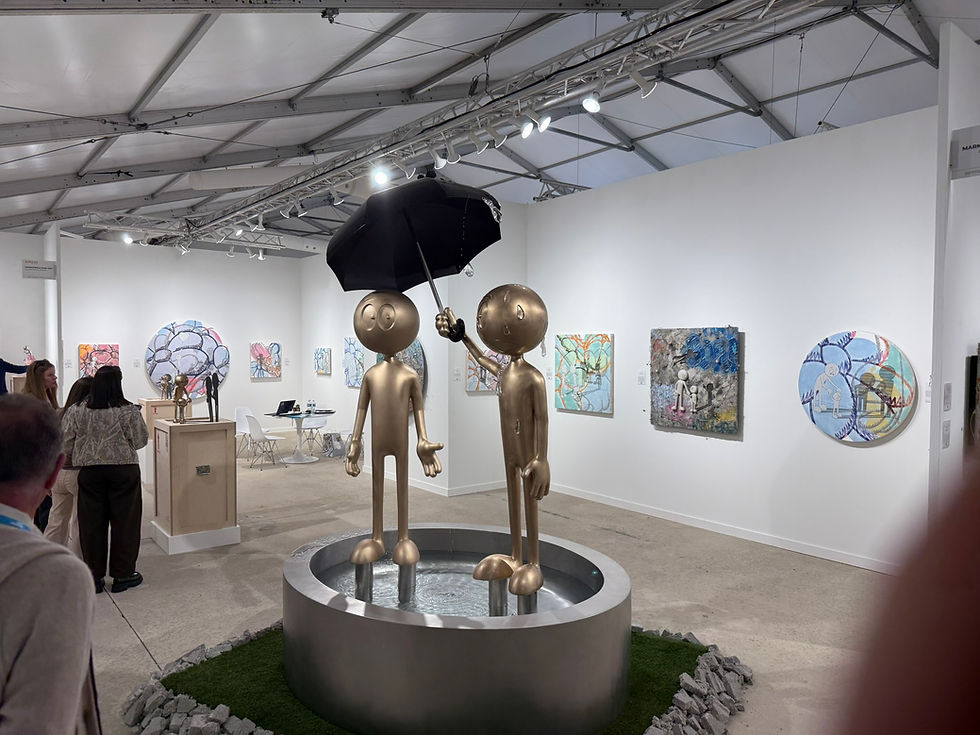
Recent findings from the Art Basel & UBS Art Market Report and the Bank of America Art Market Report show a market increasingly driven by trust, selectivity, and documentation quality.
Key market trends include:
Greater scrutiny around provenance and authenticity
Increased importance of documentation in high-value transactions
Stronger demand for historically grounded works
Reduced tolerance for fragmented ownership histories
Collectors are no longer evaluating artworks solely based on aesthetics or artist reputation. They are increasingly evaluating:
Provenance quality
Documentation continuity
Transparency and traceability
Cultural and historical context
This creates both a challenge and an opportunity for galleries and dealers.
Why Provenance Continuity Matters for Galleries

For galleries, provenance continuity strengthens the long-term reputation and market confidence surrounding the artists they represent.
Well-documented works are more likely to:
Maintain value over time
Transition successfully into secondary markets
Attract institutional and museum interest
Build stronger collector trust
Preserve artist's legacy
By supporting provenance continuity from the outset, galleries help create a stronger ecosystem around both the artwork and the artist’s career.
This approach also demonstrates professionalism and long-term stewardship, increasingly important in a more sophisticated global market.
The Risks of Fragmented or Poor Provenance
The art market has repeatedly seen how incomplete or disputed provenance can create serious legal, financial, and reputational issues.
One of the most widely discussed examples remains Amedeo Modigliani’s Seated Man with a Cane, where disputed ownership history and provenance gaps led to years of litigation and market uncertainty.
Cases involving:
Forged documentation
Incomplete ownership records
Fabricated provenance histories
continue to impact collectors, galleries, institutions, and auction houses globally.
For collectors and art buyers, establishing clear provenance from the beginning helps reduce future risk for both artists and collectors.
Artwork Passports™ and the Role of Galleries and Dealers

Artwork Passports™ by The Fine Art Ledger were developed to help galleries, dealers, artists, and collectors preserve provenance continuity from the moment an artwork enters the market.
An Artwork Passport™ creates a centralized and evolving record for an artwork that can include:
Original acquisition details
Ownership history
Certificates of authenticity
Exhibition and publication records
Artist context and narrative
Conservation and condition information
Historical and cultural documentation
For galleries, this provides a framework to help collectors maintain provenance integrity throughout the artwork’s lifecycle.
Rather than provenance becoming fragmented over time, Artwork Passports™ support continuity and transparency across ownership transitions and market activity.
Why Artwork Passports™ Benefit Galleries and Dealers
Artwork Passports™ offer several long-term advantages for galleries and dealers.
Strengthening Collector Confidence
Collectors increasingly value transparency and documentation quality. Providing structured provenance support at the point of sale demonstrates professionalism and long-term commitment.
Supporting Artist Legacy
Continuous provenance records help preserve the historical and cultural significance of artworks across generations.
Improving Secondary Market Positioning
Artworks with strong provenance continuity are often more attractive in resale environments, helping reinforce the long-term market position of represented artists.
Enhancing Institutional Appeal
Museums and institutions increasingly prioritize artworks with clear documentation and traceable histories.
Reducing Documentation Fragmentation
Artwork Passports™ help centralize critical records that might otherwise become separated, lost, or difficult to verify over time.
Provenance as a Service to Collectors
For galleries and dealers, provenance support and infrastructure should no longer be viewed as administrative paperwork attached to a transaction. It is part of the sale and the collector experience.
Collectors are not simply purchasing objects. They are acquiring cultural assets whose value increasingly depends on:
Trust
Transparency
Historical continuity
Verifiable documentation
Helping collectors preserve provenance from the outset is a meaningful extension of stewardship and professional responsibility.
Traditionally, certificates of authenticity, invoices, provenance records, artist literature, and condition reports are emailed separately, printed, or physically stored — often becoming fragmented, misplaced, deleted, or lost over time. This creates long-term problems for collectors around authenticity verification, resale readiness, provenance continuity, and documentation integrity.
Artwork Passports™ by The Fine Art Ledger provide galleries, dealers, and artists with a far more effective solution.
At the point of sale, galleries can easily create a secure digital Artwork Passport™ and catalog the artwork directly on The Fine Art Ledger’s platform. This creates a continuously maintainable digital artwork record containing:
Certificates of authenticity
Bills of sale
Artwork specifications
Artist information and literature
Provenance and ownership history
Exhibition and publication records
Installation and condition imagery
Rather than existing separately across paper files, PDFs, email chains, cloud folders, or storage systems, all provenance and authenticity information becomes centralized and connected to the artwork itself.
Using The Fine Art Ledger’s integrated artwork identification and digital cataloging infrastructure, collectors can instantly access the authenticated artwork record directly from the artwork with a simple tap of their phone at any time.
In addition, the artwork is cataloged in the buyer's own FAL collection, starting the buyer off form the get-go on the right footing with not only the work of art but organization of all the provenance and contextual information, all neatly stored and accessible at any time: not from a disparate spreadsheet or art inventory platform, but from the work itself.
This transforms provenance from fragmented paperwork into a living digital record that travels continuously with the artwork across ownership changes and throughout its lifecycle.
For galleries and dealers, this means they are no longer simply selling an artwork. They are providing collectors with long-term provenance infrastructure that helps preserve:
Authenticity
Artwork identity
Documentation continuity
Collector confidence
Resale readiness
Long-term cultural and financial value
In an increasingly transparency-driven art market, Artwork Passports™ allow galleries and dealers to deliver meaningful long-term value beyond the initial transaction while helping future protect both artworks and art markets from provenance fragmentation, documentation loss, and authenticity disputes.
The Future of the Primary Art Market
As the art market becomes more global and data-driven, provenance continuity will likely become an expected standard rather than an added feature.
Collectors entering the market today are increasingly aware of:
Authentication and identification risks
Provenance fraud
Long-term value preservation
Institutional documentation standards
Galleries and dealers that prioritize provenance infrastructure early will be better positioned to:
Build collector trust
Support artist careers long-term
Differentiate themselves in a competitive market
Future-proof artworks entering circulation today
Provide a comprehensive and professional service to their clients
Conclusion
The future value of artworks will increasingly depend not only on artistic significance, but on the quality and continuity of their provenance.
Collectors who prioritize documentation and transparency today will be better positioned to protect both the cultural and financial value of their collections in the future.
The best place to begin that process is in the primary market. At the first sale.
Artwork Passports™ by The Fine Art Ledger help galleries, dealers, artists, and collectors establish provenance continuity from the first sale onward, creating a stronger foundation for trust, transparency, and long-term value preservation across the global art market.
From The Fine Art Ledger Editorial Desk


Comments