
Art Basel Week 2026: Reflections from the World's Leading Art Fair (Part I of III)
This is Part I of a three-part editorial series from The Fine Art Ledger reflecting on our visit to Art Basel and VOLTA Basel 2026, during the week June 15 to June 21, 2026. Across this series, we revisit the fairs, the remarkable museums and public art of Basel, the evolving international art market, and the experiences that continue to make Art Basel Week the most influential gathering on the global art calendar.
For one remarkable week each June, the global art world converges on Basel, Switzerland.
Collectors, museum directors, artists, curators, galleries and advisors arrive from every continent, transforming the Swiss city into an extraordinary meeting place where art, scholarship and commerce intersect.
Yet what makes Basel exceptional is not simply the fair itself. It is the way contemporary art spills into the city's museums, historic streets and public squares, creating an experience that extends far beyond the walls of Messe Basel.
Basel: A City Transformed by Art
There are few places where an international art fair becomes so completely intertwined with the identity of its host city.
During Art Basel Week, Basel does not simply host one of the world's leading contemporary art fairs—it comes alive with art. Medieval streets fill with collectors speaking half a dozen languages. Museum courtyards become meeting places for curators and artists. Historic squares host monumental public commissions, while cafés along the Rhine provide an informal backdrop for conversations that continue long after the exhibition halls have closed.
Unlike many international fairs confined largely to convention centers, Basel invites visitors to wander. A walk through the Old Town may unexpectedly reveal a contemporary installation. Crossing the Mittlere Brücke offers sweeping views of the Rhine before leading towards another museum or gallery. Every route through the city becomes part of the cultural experience.
This relationship between the fair and its surroundings is what continues to distinguish Basel from every other destination on the international art calendar.
For The Fine Art Ledger, Art Basel Week has never been simply about attending an art fair. It is about experiencing an entire city transformed by art.

Art Basel Week 2026: Setting the Global Benchmark
Art Basel once again confirmed why it remains the world's most influential gathering for modern and contemporary art.
The 2026 edition of the flag-ship fair, Art Basel, brought together 290 leading galleries from 43 countries and territories, presenting an extraordinary cross-section of twentieth and twenty-first century artistic practice.
From museum-quality masterpieces to ambitious contemporary installations, the breadth of work on display reflected both the remarkable diversity of today's international art market and Basel's enduring role as its principal meeting place.
Yet what struck us most this year was not simply the quality of the artworks, but the quality of the conversations surrounding them.
Collectors appeared increasingly measured in their approach. Rather than rushing from booth to booth, many appeared to spend time engaging with galleries, discussing artists, examining exhibition histories and considering broader questions of provenance, institutional recognition and long-term significance.
There was confidence throughout the fair—but it was confidence built upon knowledge rather than speculation.

A Market Defined by Quality Rather Than Hype
Every edition of Art Basel offers a snapshot of the global art market at a particular moment in time.
If there was one defining characteristic of Basel 2026, it was discipline.
The strongest gallery presentations were rarely the loudest. Instead, many exhibitors favored carefully curated displays that allowed individual artists and bodies of work to breathe. Booths increasingly resembled thoughtfully constructed exhibitions rather than commercial inventories, encouraging visitors to spend time with works rather than simply moving from one headline name to another.
The impression and take away was a focus on artistic practice, institutional context and scholarship rather than short-term market performance. Provenance, museum exhibitions and publication history were frequently discussed alongside aesthetics, reflecting an increasingly sophisticated approach to collecting.
It suggested a market that continues to reward artists whose work demonstrates lasting cultural significance rather than temporary popularity.
We believe, that for collectors, this is a healthy development, and indicative of an art fair that is institutional, grounded and reflective of what should be the cornerstone of the market.
Museum-Quality Presentations
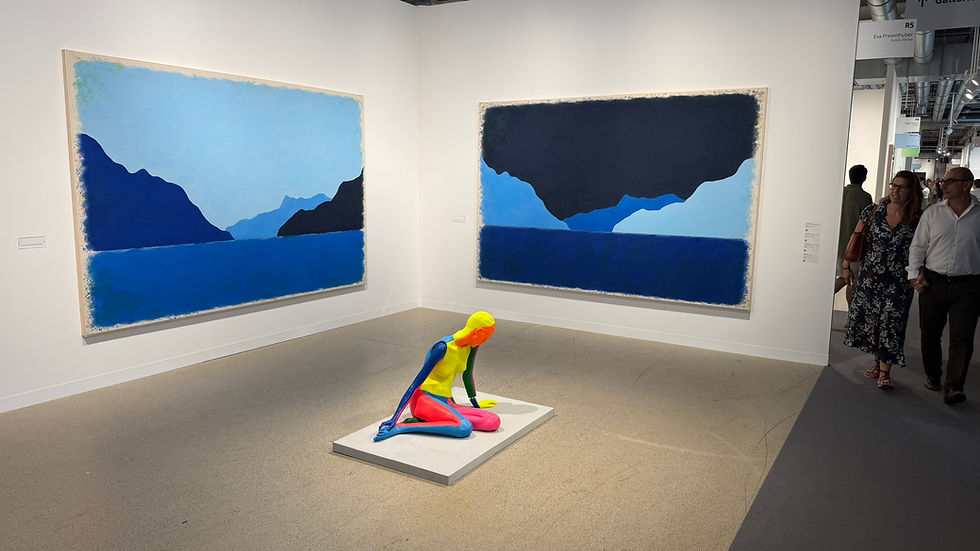
One of Art Basel's enduring strengths lies in its extraordinary ability to bring together artists from multiple generations within a single environment.
Walking through the fair, visitors could move effortlessly between twentieth-century masters and some of the most influential voices shaping contemporary art today.
Among the artists attracting attention were David Hockney, whose paintings continue to embody the vitality and innovation that defined his remarkable career. His landscapes and portraits remain among the most recognizable works in post-war art, and their presence at Basel served as a reminder of his profound influence on generations of artists and collectors alike.
Equally compelling were presentations featuring Yayoi Kusama, whose distinctive visual language continues to captivate audiences around the world. Her work demonstrates that conceptual rigor and widespread public appeal need not exist in opposition, but can instead reinforce one another through extraordinary artistic consistency.
Outside the exhibition halls, visitors were welcomed by Nairy Baghramian's major public commission in Messeplatz, one of Art Basel's signature annual installations. Positioned at the entrance to the fair, the work immediately established the dialogue between contemporary art and public space that would continue throughout the city during Art Basel Week.
Beyond these internationally recognized names, Basel continued to be a place of discovery.
Emerging artists shared the same international stage as established masters, reminding visitors that today's unknown talent may well become tomorrow's museum retrospective.
That balance between historical importance and future possibility remains one of Art Basel's defining characteristics.

Unlimited: Art Beyond Conventional Boundaries
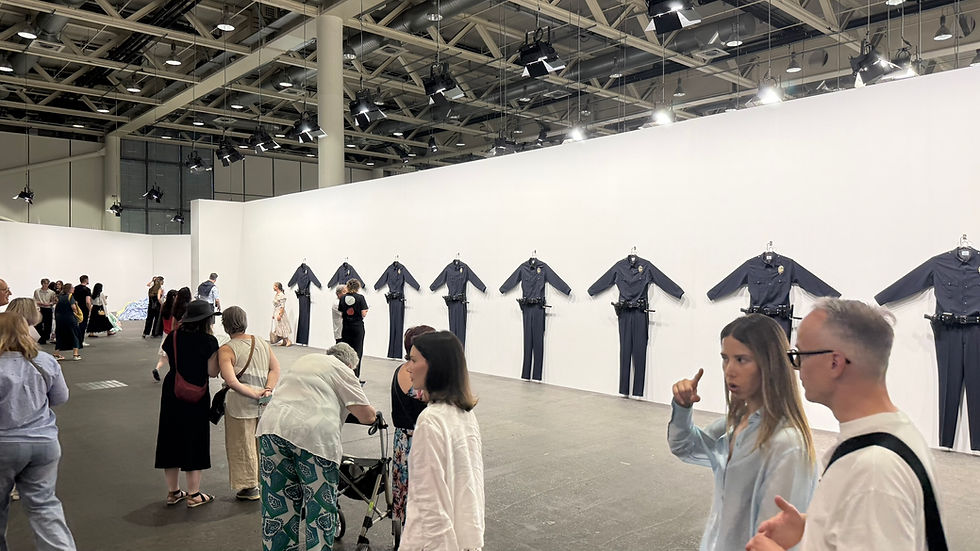
No visit to Art Basel would be complete without experiencing Unlimited, the fair's celebrated platform for monumental installations and large-scale artistic experimentation.
Curated in 2026 by Ruba Katrib, Unlimited once again challenged conventional ideas about how contemporary art should be experienced.
Rather than presenting artworks as isolated objects, many installations transformed entire architectural spaces into immersive environments. Monumental sculpture, expansive painting, moving-image works and ambitious multidisciplinary projects invited visitors not simply to observe, but to participate through movement and prolonged engagement.
Many of its strongest works reveal themselves gradually, encouraging viewers to reconsider scale, perspective and the physical relationship between artwork and audience.
Conversations That Shape the Market
Perhaps the most valuable aspect of Art Basel lies beyond the artworks themselves.
Throughout the week, conversations unfold everywhere.
Collectors exchange observations over morning coffee. Museum directors meet with galleries to discuss future exhibitions. Artists reconnect with curators. Art advisors introduce clients to emerging talents. Journalists compare notes on the week's most significant discoveries. And so on.
Basel creates a remarkable sense of accessibility within the international art community.
Established collectors and first-time visitors move through the same streets, attend the same museum exhibitions and encounter the same public artworks.
For The Fine Art Ledger, these conversations remain among the most rewarding aspects of attending Art Basel, in Basel. They offer insight not only into individual artists and market developments, but also into the broader cultural questions shaping the future of collecting. In a way that is art focused, and without, generally, the hype and side-shows that consume its sister, Miami, fair.
Looking Beyond the Exhibition Halls
While Messe Basel remains the heart of Art Basel Week, one of the fair's greatest achievements is encouraging visitors to explore everything beyond it.
The city itself becomes an extension of the exhibition. Historic streets lead naturally towards museums. Public squares become sites for contemporary installations.
The Rhine provides moments of reflection between exhibitions, and the chance to cool off in the exceptional mid-June heat by attempting a Rheinschwimmen with your clothes packed in a brightly colored, waterproof bag called a Wickelfisch, which doubles as a personal flotation device while drifting down the Rhine, under the Mittlere Brücke, starting from the riverbank below the Museum Tinguely and ending before the Dreirosenbrücke. Some 1.8 miles, or part of it we can, perhaps regrettably we were content to observe from the dryness of the Mittlere Brücke.

As we ventured deeper into Basel, exploring the remarkable public installations of Art Basel Parcours, via the Museum der Kulturen Basel, returning to the Kunstmuseum Basel, travelling to the Fondation Beyeler, and discovering emerging artists at VOLTA Basel, it became increasingly clear that the world's leading art fair is only one part of what makes Basel extraordinary.
About this Series
This article is Part I of The Fine Art Ledger's editorial coverage of Art Basel Week 2026 in Basel, Switzerland. The series explores Art Basel, Art Basel Unlimited, Art Basel Parcours, VOLTA Basel, Basel's museums, the international art market and the future of collecting.
In Part II : Art Basel Parcours, Ibrahim Mahama's monumental public installation 'The God of Small Things', the Museum der Kulturen Basel, Fondation Beyeler, Kunstmuseum Basel, and why VOLTA continues to be one of the most rewarding destinations for discovering emerging contemporary artists.


Comments