
Inside LACMA's David Geffen Galleries: Peter Zumthor's Vision for the Permanent Collection

The first thing you notice is the concrete. It curves overhead in a long, heavy sweep, gray and raw against the sky, and somehow it seems to float. Underneath, palm trees and café tables sit in its shadow. Above, a band of glass hints at what is inside. It does not look like a museum, at least not the kind most of us grew up visiting.
That is the point. LACMA's David Geffen Galleries, designed by Swiss architect Peter Zumthor, opened in April 2026 and changed not only the look of the Los Angeles County Museum of Art, but how its permanent collection is experienced. We spent an afternoon inside to see what that feels like.
A Building That Crosses Wilshire
The David Geffen Galleries stretch about 900 feet and cross Wilshire Boulevard, connecting both sides of LACMA's campus. Inside are 110,000 square feet of gallery space, bringing the museum's total to 220,000 square feet. The project also opened 3.5 acres of new outdoor space below and around the building.
Zumthor is known for buildings that feel quiet, solid and deeply tied to their materials, and that sensibility is everywhere here. The concrete is left exposed, its texture and color visible up close. Long glass walls let daylight in at the edges. Outside, the shaded spaces beneath the building have become a place to sit, gather and wander before you ever walk inside.

Inside the David Geffen Galleries: One Level, No Set Path
Most museums guide you. You start in one wing, move through the centuries in order, and exit through the gift shop. The David Geffen Galleries do the opposite. All of the art is on a single level, and the museum describes the design as having no hierarchies and no prescribed path for visitors.
Instead of being grouped strictly by period or medium, the collection is organized around the world's waters: the Pacific, Indian and Atlantic Oceans and the Mediterranean Sea. The idea is to show how cultures connected through trade, migration and exchange. At any one time, about 2,500 to 3,000 works are on view, chosen by 45 curators.
In practice, it means you wander. A turn can bring you from one century or continent to another. Some visitors will find that freeing, and others will miss the familiar timeline, but either way, it makes you look more closely at what is in front of you.
How the Walls Change the Way We See
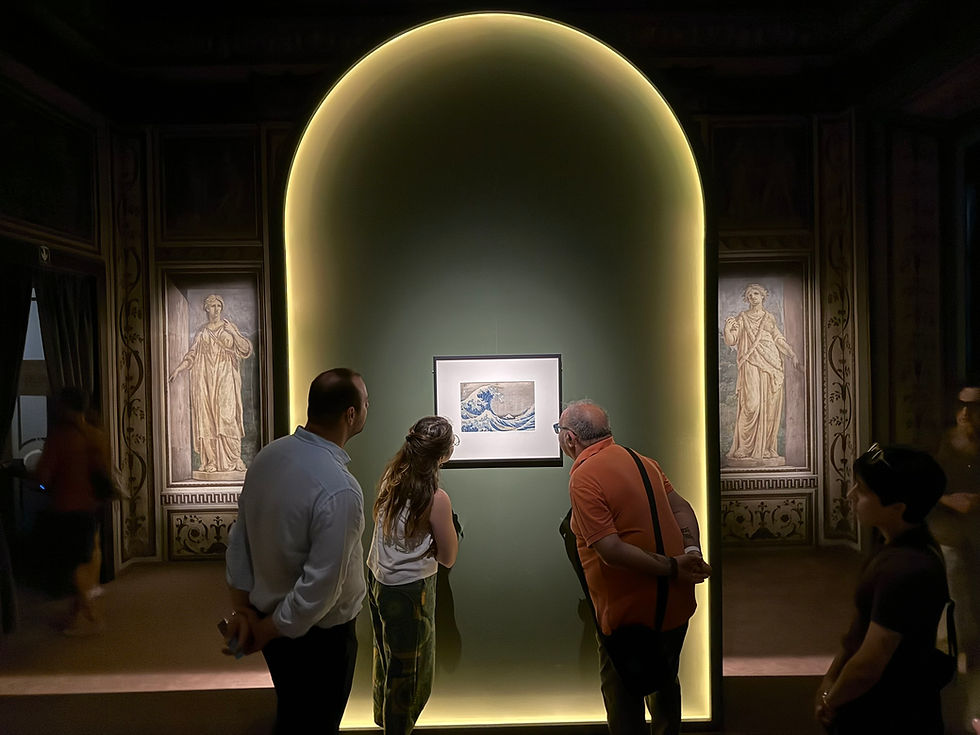
One of the most striking design choices is easy to miss at first: the walls. Throughout the galleries, the color and surface behind the art shift from room to room, and each one changes how the works feel.

A wall of 17th-century Dutch paintings, church interiors, harbors and landscapes, is set against a deep, dusky blue. In the low light, their gilded and dark wood frames glow, and the scenes feel almost like windows into another time.

Then there is Claude Monet's Water Lilies (c. 1908), hung against a warm, dark red. The color brings out the soft pinks of the flowers and the cool blues and violets of the pond, so the painting seems to glow from within.
Highlights to Look For
The collection is vast, but a few works are worth seeking out on your visit:
Vincent van Gogh, Tarascon Stagecoach (1888)
Georges de La Tour, The Magdalen with the Smoking Flame (c. 1635 to 1637)
Claude Monet, Water Lilies (c. 1908)
Because the layout has no set route and works may be rotated, check LACMA's website before you go to see what is currently on view.
A New Way to Experience a Museum
The David Geffen Galleries ask visitors to slow down, wander and make their own connections. A Dutch harbor scene and a French garden pond may sit only a short walk apart, joined less by a timeline than by the waters that carried people, goods and ideas across the world.
Whether you love the concrete or miss the old galleries, the building is worth seeing in person. Go with time to spare, follow your curiosity, and notice the walls.
Every Work Has a Story
Behind each of the thousands of works on view is a history: who made it, who owned it, and how it reached LACMA’s walls.
That history rarely shows on the surface. A painting’s frame, canvas and colors can tell you a great deal, but not where it has been.
Museums keep careful records of those journeys, from purchase documents and gift agreements to exhibition histories and conservation reports. They are part of what allows a museum to show a work with confidence.
Private collectors, artists and galleries can keep that kind of record too.
The Fine Art Ledger’s Artwork Passports™ bring an artwork’s details, supporting documents and recorded ownership history together in one digital record. A Passport can accompany the work as it moves between owners, keeping its story organized and accessible over time.
Explore how The Fine Art Ledger’s Artwork Passports™ help artists, galleries and collectors preserve the stories behind their works.
Frequently Asked Questions
When did LACMA’s David Geffen Galleries open?
The David Geffen Galleries opened in April 2026.
Who designed the David Geffen Galleries?
They were designed by Swiss architect Peter Zumthor, known for quiet, solid buildings tied closely to their materials.
How is the art organized in the David Geffen Galleries?
Instead of being grouped strictly by period or medium, the collection is organized around the world’s waters: the Pacific, Indian and Atlantic Oceans and the Mediterranean Sea.
How many works are on view?
About 2,500 to 3,000 works are on view at any one time, chosen by 45 curators.
Is there a set route through the galleries?
No. All of the art is on a single level with no prescribed path. Works may rotate, so check LACMA’s website before you visit.
How can collectors keep records of their artwork like museums do?
Collectors can keep an artwork’s details, supporting documents and ownership history together in one place. The Fine Art Ledger’s Artwork Passports™ bring this information into a single digital record that can accompany the work as it moves between owners.


Love this! Amazing museum