
What Is Art Authentication and Why Does It Matter?
In the art world, authenticity is not merely a question of prestige—it is a matter of truth, value, and cultural preservation. Art authentication underpins trust between artists, collectors, galleries, museums, and institutions. Yet despite its importance, the process and significance of authentication are often misunderstood.
As global art markets expand and values rise, art authentication has become one of the most critical pillars of a stable, transparent art ecosystem.
What Is Art Authentication?
Art authentication is the process of verifying that an artwork was genuinely created by the artist to whom it is attributed. This determination relies on a combination of expert analysis, scientific testing, and historical documentation.
Authentication goes beyond identifying an artist’s name. It establishes:
When and how a work was created
Whether its materials are historically consistent
How it fits within the artist’s known body of work
Its documented ownership history, or provenance
When successfully authenticated, an artwork is typically accompanied by formal documentation—often considered the work’s “birth certificate” in the art market.
Why Art Authentication Is Essential
Financial Protection and Market Value
Authentication directly determines an artwork’s financial value. A verified work by a recognized artist may be worth millions, while an identical-looking object without authentication may hold little to no market value.
For collectors, authentication protects against:
Forged or misattributed works
Financial loss
Legal disputes
In practical terms, authentication does not merely enhance value—it often defines whether value exists at all.
Preserving Cultural and Art Historical Integrity
Beyond economics, authentication safeguards cultural heritage. Properly attributed artworks contribute to accurate art historical records and scholarly research.
Misattributions distort historical narratives, misrepresent artistic movements, and erode public trust. Museums, universities, and cultural institutions depend on authenticated works to educate audiences and preserve artistic legacies for future generations.

Legal and Ethical Safeguards
Authentication plays a crucial role in:
Identifying stolen or unlawfully traded artworks
Supporting restitution efforts
Protecting artists’ intellectual property
For living artists, authentication ensures rightful attribution and compensation, helping prevent unauthorized reproductions from undermining their careers and reputations.
Traditional Methods of Art Authentication
Expert Connoisseurship
Historically, authentication relied on expert connoisseurs—scholars, curators, and specialists with deep familiarity with an artist’s style and techniques. These experts assess:
Brushwork and composition
Stylistic consistency
Materials and craftsmanship
While essential, expert opinion can be subjective, and disagreements between authorities are not uncommon.
Scientific Analysis
Modern authentication increasingly incorporates scientific tools, including:
Materials analysis (pigments, binders, supports)
Radiocarbon dating for older organic materials
Infrared and X-ray imaging to reveal underdrawings and alterations
Microscopic examination of surface aging and brushwork
These methods provide objective data that can support or challenge stylistic conclusions.
Provenance Research
Provenance traces an artwork’s ownership history from creation to the present. Sales records, exhibition catalogs, archival references, and institutional documentation help establish continuity and legitimacy.
While gaps in provenance do not automatically indicate forgery, they require additional scrutiny.
For readers new to provenance, see: What Is Art Provenance? A Beginner-Friendly Guide for New Collectors
Challenges Facing Traditional Authentication
Time, Cost, and Accessibility
Authentication can be lengthy and expensive, often requiring multiple experts and tests. These barriers disproportionately affect emerging artists and smaller collectors.
Subjectivity and Disputes
Even with scientific support, interpretations may differ. High-profile disputes can linger for decades, impacting market confidence.
Documentation Vulnerabilities
Paper-based certificates can be lost, damaged, forged, or separated from artworks—creating long-term risks.
The Growing Authentication Crisis in the Art Market
The contemporary art market faces unprecedented challenges:
Increasing global trade
Rapid resale cycles
Rising artwork values
Sophisticated Forgeries
Today’s forgers use advanced materials, digital tools, and artificial aging techniques, producing works capable of deceiving traditional methods for years.
Globalization and Documentation Loss
As artworks move quickly across borders, documentation gaps become more common, complicating verification.
Digital, AI, and New Media Art
Digital art and artificial intelligence introduce entirely new authentication challenges, as files can be copied perfectly without clear mechanisms for originality.
Modern and Emerging Authentication Solutions
Blockchain-Based Records
Blockchain technology creates immutable, tamper-resistant records of authenticity, reducing reliance on fragile physical documentation.
Artificial Intelligence
AI systems can analyze vast datasets of authenticated works to detect anomalies, stylistic inconsistencies, and forgery patterns at scale.
Integrated Digital-Physical Systems
Technologies such as NFC tags and secure digital certificates can link physical artworks directly to their authentication records, enabling instant verification.
Broader Accessibility
Technology-driven platforms are making professional authentication tools more accessible to artists and collectors at all levels.
Consequences of Poor Authentication
Market destabilization following forgery scandals
Financial losses for collectors
Reputational damage to artists and institutions
Erosion of public trust in cultural organizations
Authentication failures do not remain isolated—they ripple across entire market segments.
Best Practices for Reliable Art Authentication
Use multiple verification methods
Maintain comprehensive digital and physical documentation
Reassess works as new data or technologies emerge
Work with credentialed professionals who adhere to ethical standards
enable immediate verification using mobile devices, which rely on blockchain-immutable records of authenticity, such as the system offered by The Fine Art Ledger.

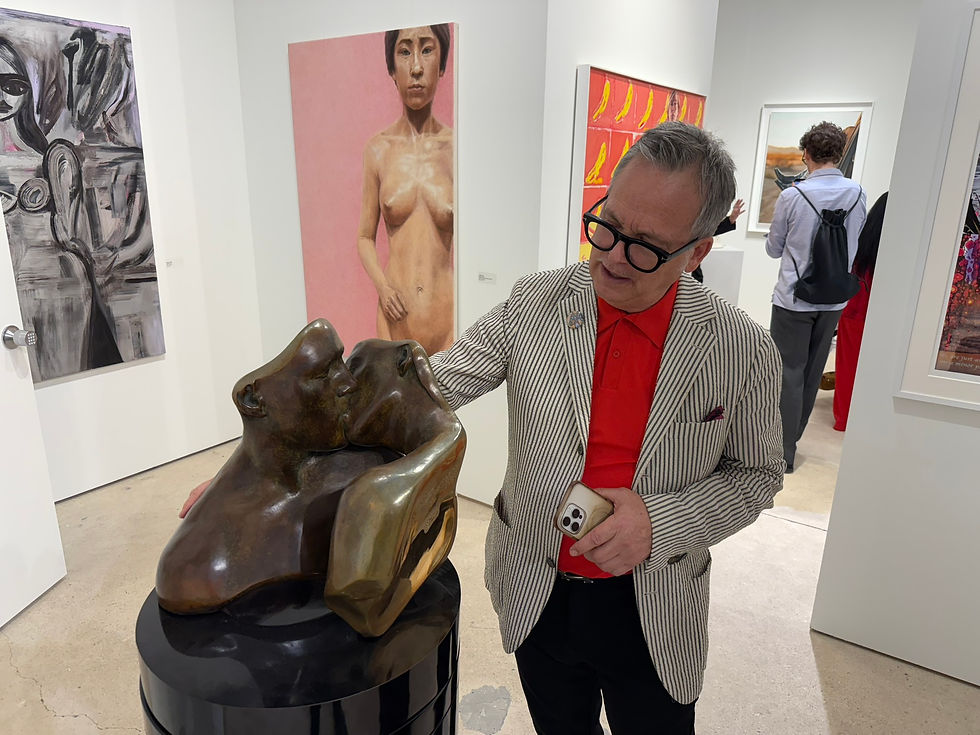
Fernando Botero Original, Art Miami, December 2025
Authentication should be viewed as an ongoing process, not a one-time event.
The Future of Art Authentication
The next generation of authentication will likely include:
Real-time verification via mobile devices
Global expert collaboration networks
Predictive AI analysis
Seamless integration into art marketplaces
These advancements promise greater transparency, efficiency, and trust across the art world.
Why Authentication Matters More Than Ever
In an era of escalating art values and increasingly sophisticated forgery, authentication is no longer optional—it is essential. It protects financial investments, honors artists’ legacies, and preserves cultural history.
For artists, collectors, galleries, museums, auction houses, and institutions alike, understanding authentication is a foundational responsibility. Those who embrace modern, secure authentication practices will be better positioned to navigate—and shape—the future of the art market.


Comments